

Punjab launched new PAK-ID App
Punjab launched new PAK-ID app Punjab has moved another step toward digital governance by introducing a mobile-based system that allows citizens to verify vehicle ownership through biometric authentication. The initiative focuses on removing long-standing procedural hurdles that people commonly face during vehicle registration and transfer. Instead of relying on manual verification, physical visits, and paperwork, the new system enables identity confirmation directly through a smartphone.
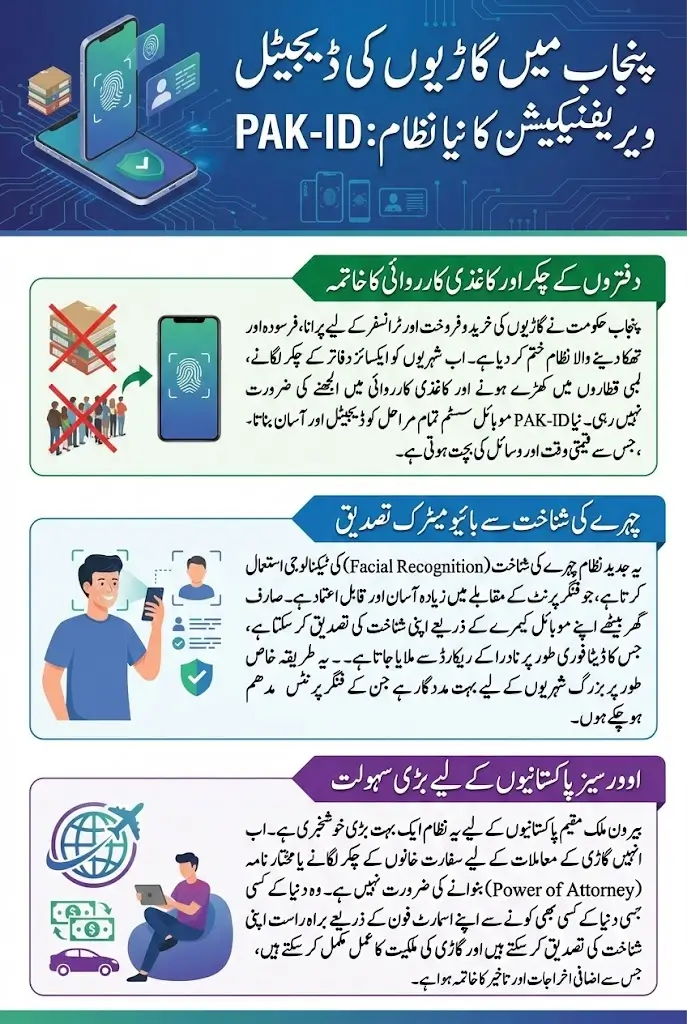
For many Pakistani citizens, especially those living in busy urban centers or remote areas, visiting excise offices has traditionally meant long queues, document verification delays, and uncertainty about processing timelines. The newly introduced mobile verification system aims to simplify this experience by shifting the entire process to a secure digital platform. Authorities believe this transformation will improve transparency, reduce processing time, and provide equal service access to residents inside Pakistan and abroad.
The initiative has been implemented by the Punjab Excise and Taxation Department in collaboration with NADRA and the Punjab Information Technology Board. These institutions have combined administrative authority, biometric data infrastructure, and technological systems to build a unified verification platform designed specifically for vehicle ownership services.
How biometric vehicle verification works through mobile authentication
The new mobile system allows users to confirm their identity using facial recognition and biometric validation technology. After entering required vehicle details and personal identification information, the system automatically compares facial data with official identity records. Once the identity is verified, the vehicle ownership process moves forward without requiring a physical presence.
This technology-driven process reflects a major shift from traditional fingerprint-based verification methods. Facial recognition provides a more flexible and reliable approach for identity authentication, particularly for individuals who face difficulties with fingerprint scanning. By enabling remote verification, authorities have created a system that aligns with modern digital service standards while maintaining strong security protocols.
The mobile-based verification system offers several operational advantages:
- Identity authentication through facial recognition technology
- Remote verification without visiting government offices
- Secure digital matching with official identity records
- Reduced reliance on manual documentation
- Faster approval workflow for ownership transfer
Major convenience for overseas Pakistanis managing vehicle ownership
One of the most significant outcomes of the new digital verification system is the relief it provides to overseas Pakistanis. Previously, citizens living abroad were required to visit embassies, submit notarized documents, or authorize representatives through power of attorney to manage vehicle transfers. These procedures often caused delays, additional expenses, and administrative complications.
With mobile biometric verification, overseas Pakistanis can now authenticate their identity directly from their smartphones regardless of location. This change eliminates the need for embassy visits and simplifies the transfer process for those who maintain assets in Pakistan while living abroad. The system ensures that identity confirmation is completed securely and efficiently without involving intermediaries.
For overseas vehicle owners, the digital system provides:
- Remote identity verification from any country
- Elimination of embassy documentation procedures
- Removal of notarized affidavit requirements
- Direct control over ownership transfer process
- Reduced processing time and administrative burden
Inclusive digital access for senior citizens and individuals with biometric limitations
A key feature of the new verification system is its accessibility for elderly citizens whose fingerprints may have faded over time. Traditional biometric machines often fail to recognize fingerprints of older individuals, leading to repeated verification attempts and procedural delays. Facial recognition technology offers an effective alternative that does not depend on fingerprint quality.
By introducing face-based authentication, authorities have ensured that senior citizens can complete vehicle ownership verification independently. The system is designed to recognize identity through visual biometric data, making it easier for individuals who previously faced challenges with standard biometric scanning methods. This inclusive approach reflects a broader effort to design public services that accommodate citizens of all age groups and physical conditions.
Accessibility improvements introduced by the system include:
- Alternative verification method for faded fingerprints
- Reduced need for physical biometric machines
- Simplified process for elderly vehicle owners
- Improved usability for citizens with verification difficulties
Cashless processing and faster ownership transfer timeline
The digital verification platform is integrated with an electronic payment system that allows citizens to pay vehicle transfer fees online. Once biometric authentication and fee submission are completed, ownership transfer is expected to be finalized within 48 hours. This represents a significant improvement compared to traditional processes that could take several days or even weeks.
The transition to cashless and paperless processing improves administrative efficiency and ensures that records are maintained securely within centralized databases. Citizens no longer need to manage physical receipts or submit multiple copies of documents. The digital workflow also reduces opportunities for procedural errors and ensures consistent service delivery across the province.
The modernized transfer process provides practical benefits such as:
- Online fee payment without visiting offices
- Paperless application submission
- Automated record verification
- Predictable processing timeline
- Transparent transaction tracking
Vehicle ownership verification process overview
| Process Stage | Citizen Action | Digital Method | Expected Result |
|---|---|---|---|
| Identity authentication | Provide personal and vehicle details | Facial recognition through mobile app | Identity confirmed securely |
| Transfer application | Submit ownership transfer request | Online form submission | Application registered |
| Fee submission | Pay transfer charges | Integrated e-payment system | Payment verified instantly |
| Ownership update | Automated record processing | Database synchronization | Transfer completed within 48 hours |
Policy direction and administrative vision behind the initiative
During the official launch ceremony, Director-General Umar Sher Chatha described the digital verification system as a major reform aimed at eliminating procedural bottlenecks in vehicle ownership services. According to officials, manual verification methods had long slowed down the transfer process, particularly for overseas citizens who faced documentation challenges across multiple departments.
Authorities have indicated that the digital verification system represents a long-term strategy to modernize public service delivery. By integrating biometric authentication with centralized databases, the government aims to create a secure and efficient environment for vehicle ownership management. The system is expected to expand gradually to support verification across provinces, strengthening coordination between regional authorities and national identity infrastructure.
The broader governance objectives of the initiative include:
- Strengthening transparency in vehicle ownership records
- Reducing administrative delays through automation
- Expanding digital public service accessibility
- Building interconnected national verification systems
Future outlook for digital vehicle services in Pakistan
The introduction of mobile biometric verification reflects a wider transformation in how public services are delivered in Pakistan. As government institutions continue to adopt technology-driven systems, citizens can expect faster processing, reduced paperwork, and more accessible services across different administrative sectors.
The digital verification platform is expected to serve as a model for future e-governance initiatives by demonstrating how biometric technology can improve efficiency and reliability in public administration. By simplifying vehicle ownership procedures and enabling remote verification, Punjab has introduced a system that aligns with modern digital standards while addressing the everyday challenges faced by ordinary citizens